Introduction
Have you ever looked up at your roof and thought, “My gutters are just decorative — how much damage could they really cause if clogged?” It’s a common thought, but gutters are much more than a trim detail. They are your home’s frontline defense against water. When they clog, small problems quickly snowball into expensive repairs involving your roof, siding, landscaping, and worst of all, your foundation.
In this long-form guide you’ll learn exactly how clogged gutters damage roofs and foundations, what to watch for, how to prevent issues, and when to call a pro. Whether you live in Fort Wayne, Huntington, Warsaw, Auburn, or any of the nearby towns like Kendallville or New Haven, the local seasons — heavy spring rains, fall leaves, and winter freezes — make gutter care essential. Let’s dig in.
How Gutters Work: The Basics
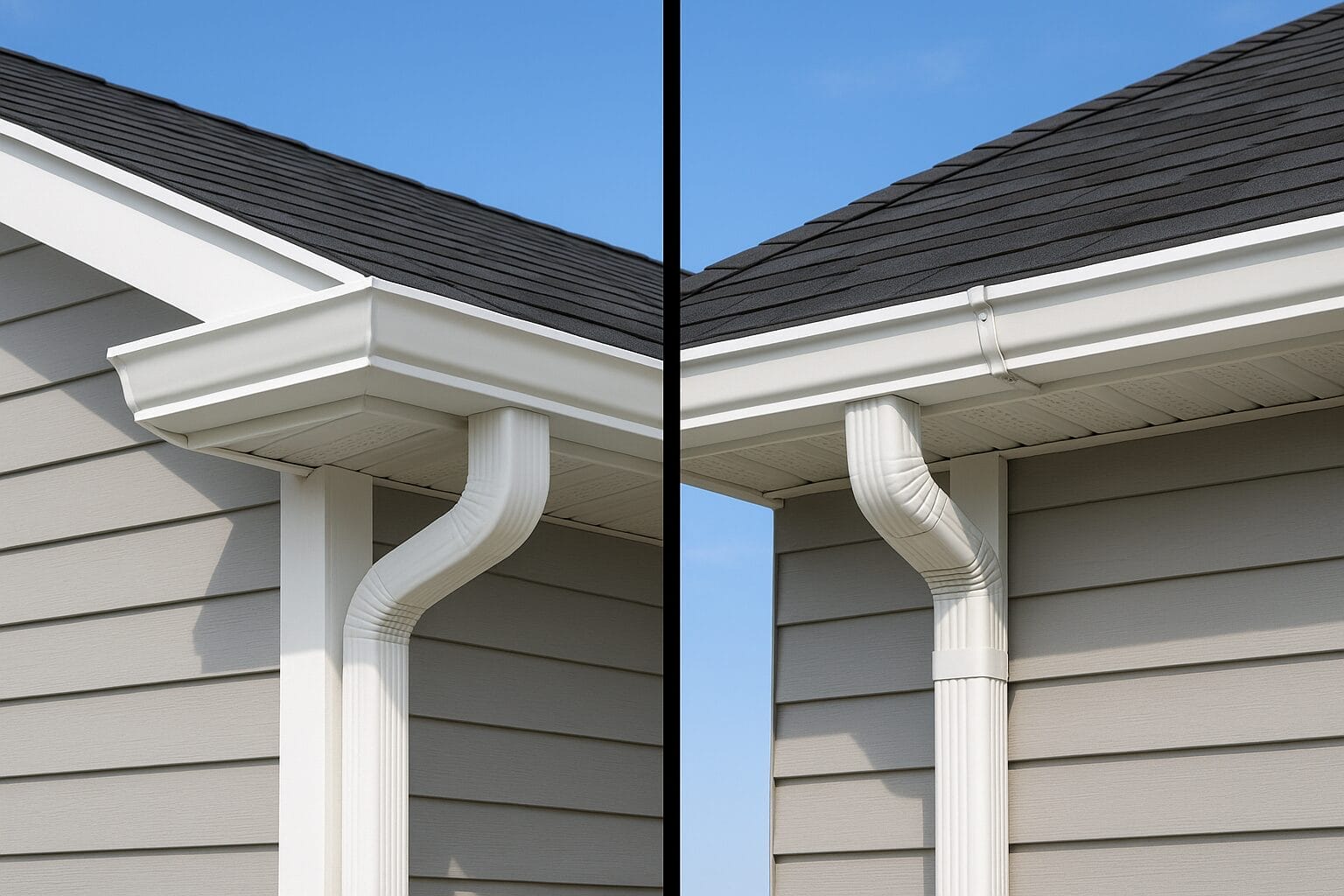
Think of gutters as a highway for rainwater. Their job is simple: collect roof runoff and carry it safely away from the house through downspouts. When everything flows freely, water follows a planned path away from vulnerable areas. But when that highway is clogged, traffic backs up, accidents happen, and the consequences can be costly.
Key components and what they do
-
Gutter troughs — collect water across the roofline.
-
Downspouts — transport water from gutters to ground level or drainage systems.
-
Elbows and extensions — redirect water away from the foundation.
-
Fascia and soffits — structural elements that can be damaged if they stay wet.
Why proper slope matters
Gutters need a slight slope toward downspouts for water to flow. If the slope is wrong, even clean gutters can pool water — and pooled water invites problems like rust, sagging, and ice formation.
What Causes Gutters to Clog?
Clogged gutters are rarely a mystery. They accumulate debris over time. Understanding the common culprits helps you prevent clogs in the first place.
Common sources of clogging
-
Leaves and twigs — the most obvious offenders, especially in fall.
-
Pine needles and seed pods — smaller debris that compacts and blocks flow.
-
Shingles granules — roof wear can send granules into gutters, where they collect.
-
Bird nests and animal debris — birds and squirrels may use gutters to build nests.
-
Dirt and sediment — over time, even fine particles settle and reduce capacity.
Seasonal factors
In northeast Indiana — places like Columbia City, Garrett, and Ossian — fall leaves and spring thaws are your calendar cues. Autumn fills gutters with leaves, while snow and ice in winter compound problems if debris remains. Heavy summer storms can also expose partially clogged gutters by overwhelming their reduced capacity.
Immediate Signs of Clogged Gutters
Not sure if your gutters are clogged? Here are the telltale signs. These are the first signals that your “gutter highway” is blocked and needs attention.
-
Overflowing water during rain, spilling down the exterior walls.
-
Staining or streaks along the siding or the foundation line.
-
Plants growing in gutters — yes, gutters can become garden beds if left alone.
-
Water pooling at the base of the house after storms.
-
Visible sagging gutters or gutters pulling away from the roofline.
How Clogged Gutters Damage Your Roof
Let’s cut to the chase: clogged gutters cause a lot of roof problems. Water that’s supposed to be carried away instead finds its way to places it shouldn’t, and roofs are particularly vulnerable.
Shingle damage and premature wear
When water sits against the roof edge, it soaks the shingle ends and the underlying felt. Over time shingles lose granules, curl, and become brittle — much faster than they should. That’s a direct path to early roof replacement.
Rotting of fascia and soffits
Fascia boards and soffits are the wooden trim pieces gutters attach to. They’re designed to hold up under dry conditions, not constant moisture. Clogged gutters that overflow saturate these elements, leading to rot and decay. Once the fascia weakens, gutters can pull away entirely.
Ice dams and frost risks in winter
In Indiana winters, trapped water in clogged gutters can freeze and form ice dams. These act like a dam on your roof, preventing meltwater from exiting. Meltwater then backs up under shingles and leaks into attic spaces. Ice dams accelerate roof and insulation damage and create dangerous icicles that can harm people below.
Roof leaks and interior water damage
Overflowing gutters redirect water against the roof and can find gaps, flashing breaches, or penetrations (like vents) where it seeps into the attic. Once water reaches insulation and interior wood, it can cause staining, rot, and mold — and the repair costs jump quickly.
How Clogged Gutters Damage Your Foundation
Foundation damage is one of the most expensive outcomes of clogged gutters because it influences the structural stability of the entire house. Here’s how a small gutter problem becomes a massive foundation issue.
Soil erosion and undermining
When gutters overflow, water pours directly beside the foundation. Over time that water washes away the soil that supports your foundation. Picture the soil as the mattress holding your home: when it erodes, the mattress sags and the house shifts.
Hydrostatic pressure and basement leaks
Saturated soil increases hydrostatic pressure (the force of water) against your foundation walls. That pressure seeks the path of least resistance — usually through cracks — pushing water into basements and crawlspaces. Basement flooding and dampness follow, often with mold and structural consequences.
Cracks, settling, and uneven floors
Uneven moisture levels around the foundation lead to differential settling: one side sinks more than the other. That can cause foundation cracks, misaligned doors and windows, and sloping or bouncy floors. Repairs can range from simple crack sealing to major underpinning projects.
Secondary Problems That Start With Clogged Gutters
Gutter clogs don’t stop at roofs and foundations — they create ripple effects across your home environment.
-
Mold and mildew — persistent moisture fosters mold on walls, attics, and insulation.
-
Pest attraction — mosquitoes breed in standing water; birds and rodents nest in debris.
-
Siding and window damage — constant water exposure causes paint peeling, rot, and drafts.
-
Landscape erosion — flower beds and lawns near downspouts can be washed away or drowned.
Real-World Examples: Local Risks and Scenarios
Let’s make this concrete. Imagine a homeowner in Fort Wayne who skips gutter cleaning one fall. Leaves block the downspouts. Come spring, melting snow and rain overwhelm the gutters, water pours down near the foundation, and the basement gets a slow leak. Or consider a house in Kendallville shaded by old oaks — needles and acorns clog gutters, ice dams form in January, and the roof develops leaks.
These storylines are common across our service area — Decatur, Columbia City, Roanoke, and even smaller towns like Spencerville or Wolcottville. The symptoms might differ depending on tree cover, roof pitch, and how cold the winter gets, but the root cause is the same: blocked water flow.
Inspection Checklist: How to Tell If You Have Problems
Before things get worse, do a quick inspection. You don’t need to be an expert to spot trouble.
-
Walk around during or right after rainfall — check if gutters overflow at any point.
-
Look for water stains and streaks on siding and near the foundation.
-
Check the attic after rain — any wet insulation or roof deck indicates leaks.
-
Inspect gutters from a safe ladder height — see if debris is compacted or if plants are growing.
-
Measure slope and look for sagging — gutters should drain toward downspouts smoothly.
DIY Gutter Cleaning: Step-by-Step
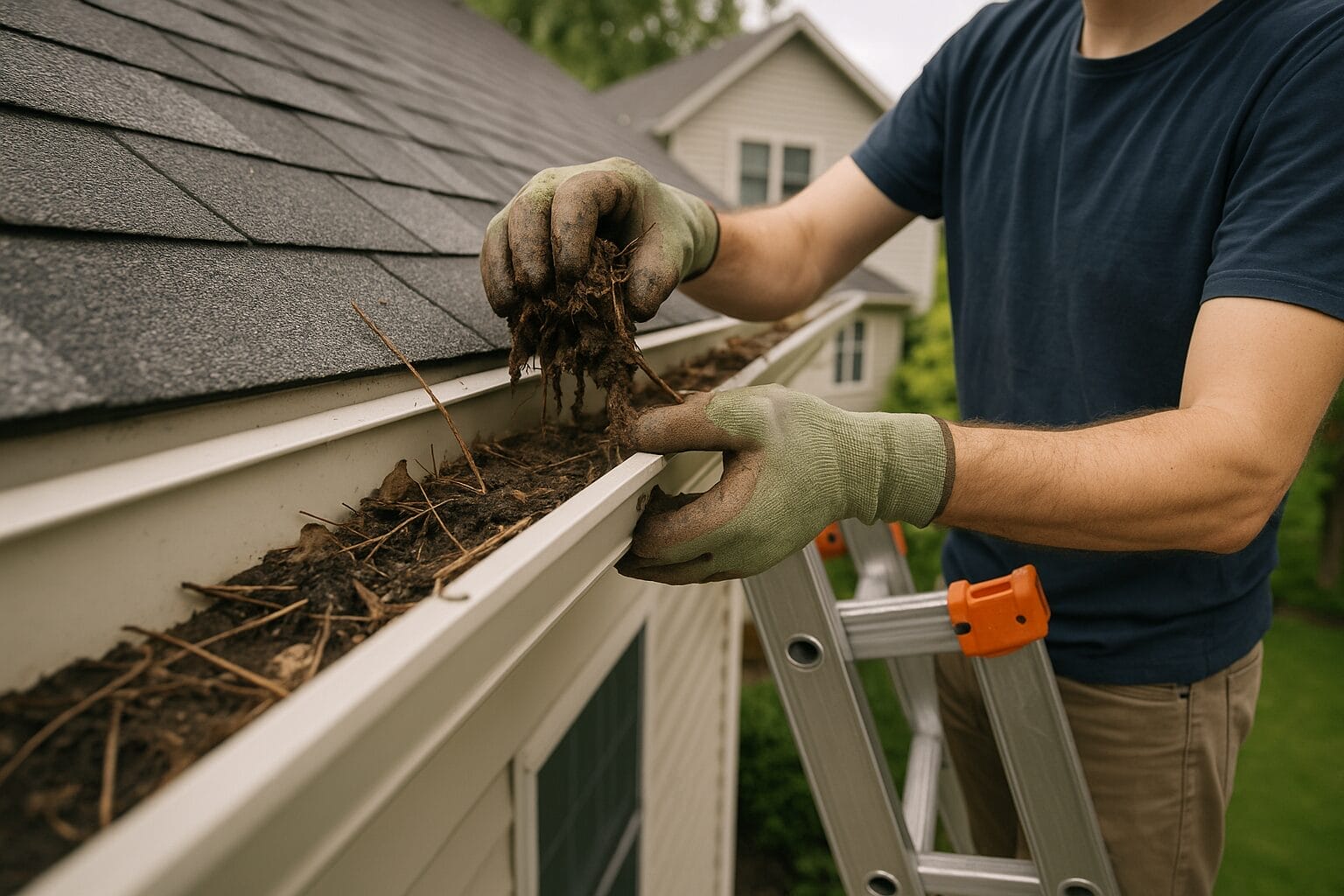
Cleaning gutters yourself can save money, but it’s not without risks. If you’re comfortable on a ladder and willing to follow safety steps, here’s how to do it effectively.
Tools you’ll need
-
Sturdy ladder with stabilizer
-
Work gloves and safety glasses
-
Gutter scoop or small trowel
-
Bucket or tarp to collect debris
-
Garden hose with spray nozzle
-
Plumber’s snake (for stubborn downspout clogs)
Cleaning steps
-
Set your ladder safely on level ground, use a stabilizer or have a helper hold the base.
-
Remove large debris by hand or with a scoop, working downhill toward the downspout.
-
Flush the gutters with water to check flow and flush small particles toward the downspout.
-
Unclog downspouts using a plumber’s snake or by disconnecting the bottom elbow and flushing from the top.
-
Inspect for damage — look for loose fasteners, rust, or holes that need repair.
Safety tips
-
Never lean or reach too far from the ladder; move the ladder instead.
-
Avoid working on gutters alone — have a spotter.
-
Don’t attempt gutter work if your roof pitch is steep or if there’s ice present.
Limitations of DIY and When to Call a Professional
DIY works for many homeowners, but some situations call for a pro. If your gutters are high, the roof is steep, your gutters are heavily damaged, or you’ve had repeated leaks, hire a licensed expert. Professionals provide safer, faster, and more thorough service — and they can spot issues you might miss.
Signs you need a pro
-
Repeated clogs despite cleaning
-
Exterior water stains and multiple leak sources
-
Foundation cracks or basement flooding
-
Complex gutter systems (multiple levels, hidden gutters, or built-in gutters)
-
Installation of gutter guards or downspout rerouting
Gutter Guard Systems: Do They Work?
Gutter guards promise “clean gutters forever,” but the reality is more nuanced. They can significantly reduce debris entry and cut down on cleaning frequency, but they’re not bulletproof.
Types of systems
-
Mesh screens — block large debris but may clog with fine particles and shingle granules.
-
Foam inserts — sit inside the gutter and allow water through while trapping larger debris; can still trap small sediment.
-
Surface-tension covers — allow water to flow over the cover into the gutter; effective but require precise installation.
Pros and cons
Gutter guards reduce maintenance but don’t eliminate it. They also add cost and may need occasional servicing, especially in heavily wooded yards like those found near Angola, Bluffton, or Roanoke. For some homeowners, a high-quality guard is worth the investment; for others, regular cleaning remains the simplest solution.
Preventative Measures That Truly Help
Prevention is cheaper than replacement. These practical steps limit clogs and reduce damage risk.
-
Trim trees near the roof to reduce leaf and branch debris — especially helpful in Woodburn and Garrett where mature trees are common.
-
Install downspout extensions to direct water at least 6–10 feet from the foundation.
-
Maintain proper gutter slope so water can move smoothly to downspouts.
-
Inspect and clean twice a year — fall and spring are ideal times in Kendallville, New Haven, and the rest of the region.
-
Consider gutter guards if your property has heavy leaf fall or pine needles.
Seasonal Maintenance Calendar
Follow this simple schedule and your gutters will reward you by staying functional and damage-free.
-
Fall: Clean gutters after most leaves have fallen. Check fasteners, slope, and downspouts.
-
Winter: Remove ice buildup safely and avoid scraping. Keep an eye on icicles and ice dams.
-
Spring: After melting, clean any trapped debris and check for spring storms.
-
Summer: Inspect after big storms and trim overhanging branches.
Cost Considerations: Cleaning vs. Repair
Gutter cleaning is a modest expense compared to roof or foundation repair. Let’s put it this way: a professional gutter cleaning might cost a few hundred dollars, while roof repairs or foundation stabilization can run into thousands or tens of thousands. Regular maintenance is your best financial defense.
Typical cost factors
-
Gutter height and accessibility
-
Amount of debris and complexity of system
-
Need for repairs or guard installation
-
Local labor rates — these can vary slightly between Fort Wayne and smaller towns like Spencerville or Wolcottville
How Insurance Views Gutter-Related Damage
Insurance companies generally expect homeowners to perform reasonable maintenance. If neglect leads to damage, claims may be denied. For example, if a clogged gutter causes a slow basement leak that worsens over years, a claim could be refused for lack of maintenance. Promptly addressing gutter issues protects both your home and your ability to claim for sudden, unavoidable events.
Case Study: Small Fixes That Prevented Big Bills
Here’s a short example to illustrate how early action helps. A homeowner in Columbia City noticed overflow at one corner during rains. A quick inspection revealed a downspout elbow clogged with packed leaves. The homeowner cleared the elbow and added a short extension to move water farther from the foundation. Problem solved — no basement seep, no rot, and only a small cost for a part and a few hours of labor. Small prevention, big payoff.
Choosing a Local Contractor
When you hire pros, choose someone who understands local weather and building practices. Ask for:
-
References and local experience — contractors who work in Fort Wayne, Auburn, or Warsaw know the seasonal patterns and typical tree debris.
-
Liability insurance — to protect you in case of accidents.
-
Written estimates and clear scope — what’s included: cleaning, repairs, guards, disposal?
-
Warranty or follow-up services — reputable companies stand by their work.
Long-Term Outlook: Protecting Your Home’s Value
Routine gutter care isn’t glamorous, but it preserves the bones of your house. A well-maintained roof and stable foundation maintain property value. If you’re thinking about selling a home in the region — from Leo-Cedarville to Waterloo — curb appeal and the absence of visible damage (like stained siding or cracked foundations) make a huge difference in buyer confidence and appraisal values.
Final Inspection and What to Expect After Repairs
After cleaning or repairs, do a short checklist to ensure the job was done right:
-
Run water through the gutters and watch for smooth flow to downspouts and away from the foundation.
-
Inspect seams and fasteners for secure attachment.
-
Confirm downspout extensions are directing water properly.
-
Review warranty or maintenance plan with the contractor.
Summary
Clogged gutters might seem like a minor nuisance, but they’re often the starting point for serious roof and foundation damage. From shingle deterioration and ice dams to basement flooding and foundation settlement, the consequences are structural and costly. The good news? Regular inspections, seasonal cleaning, proper slope, downspout extensions, and sensible gutter guards will protect your home — whether you’re in Fort Wayne, Huntington, Kendallville, or any of the other towns we serve. Take action before small clogs become big repairs: your roof, walls, foundation, and wallet will thank you.
Frequently Asked Questions (FAQs)
Q1: How often should I clean my gutters?
A1: Generally, clean gutters at least twice a year — once in late spring and once after the main fall leaf drop. If your home is heavily shaded by trees (common in places like Angola or Roanoke), quarterly cleaning may be necessary.
Q2: Can I install gutter guards and never clean again?
A2: No system is completely maintenance-free. Gutter guards reduce the frequency of cleaning by keeping large debris out, but fine particles, shingle granules, and seeds can still accumulate. Expect occasional inspections and light cleaning.
Q3: Will clogged gutters cause foundation cracks immediately?
A3: Not necessarily immediately, but chronic water exposure accelerates soil erosion and hydrostatic pressure. Over months to years, this can contribute to foundation cracks and settling — so early action matters.
Q4: Are ice dams caused only by clogged gutters?
A4: No. Ice dams form when warm attic air melts snow on the roof, which refreezes near the eaves. Clogged gutters worsen ice dams by trapping meltwater. Proper attic insulation and ventilation, combined with clean gutters, reduce ice dam risk.
Q5: How do I choose a reliable gutter contractor?
A5: Ask for local references, confirm insurance and licensure, request a written estimate, and ask about warranties. Choosing a company experienced in your area — be it Fort Wayne, Columbia City, or New Haven — ensures they understand local weather patterns and common issues.