Introduction: Why Gutters Matter More Than You Think
Have you ever watched water pour off a roof and wondered where it should go? Gutters do the heavy lifting—channeling rain and melting snow away from your foundation, landscaping, and siding. Pick the wrong type and you could be dealing with basement leaks, eroded soil, and expensive repairs down the line. Pick the right one and you get peace of mind for years.
If you live in Fort Wayne or nearby towns like Columbia City, Auburn, or Warsaw, you know our Indiana weather can be unpredictable—heavy spring rains, summer storms, and winter freeze-thaw cycles. That makes choosing the right gutter system critical. Two popular choices are seamless gutters and sectional (or “piece-by-piece”) gutters. Which is better? Let’s walk through exactly what each offers and what will work best for your home.
What Are Gutters and Why They’re Essential
Before we compare seamless vs sectional gutters, let’s define what we’re talking about. Gutters are channels attached along the edge of your roof that collect and redirect water to downspouts. Their job is simple but vital: protect your roof, siding, foundation, and landscape from water damage.
-
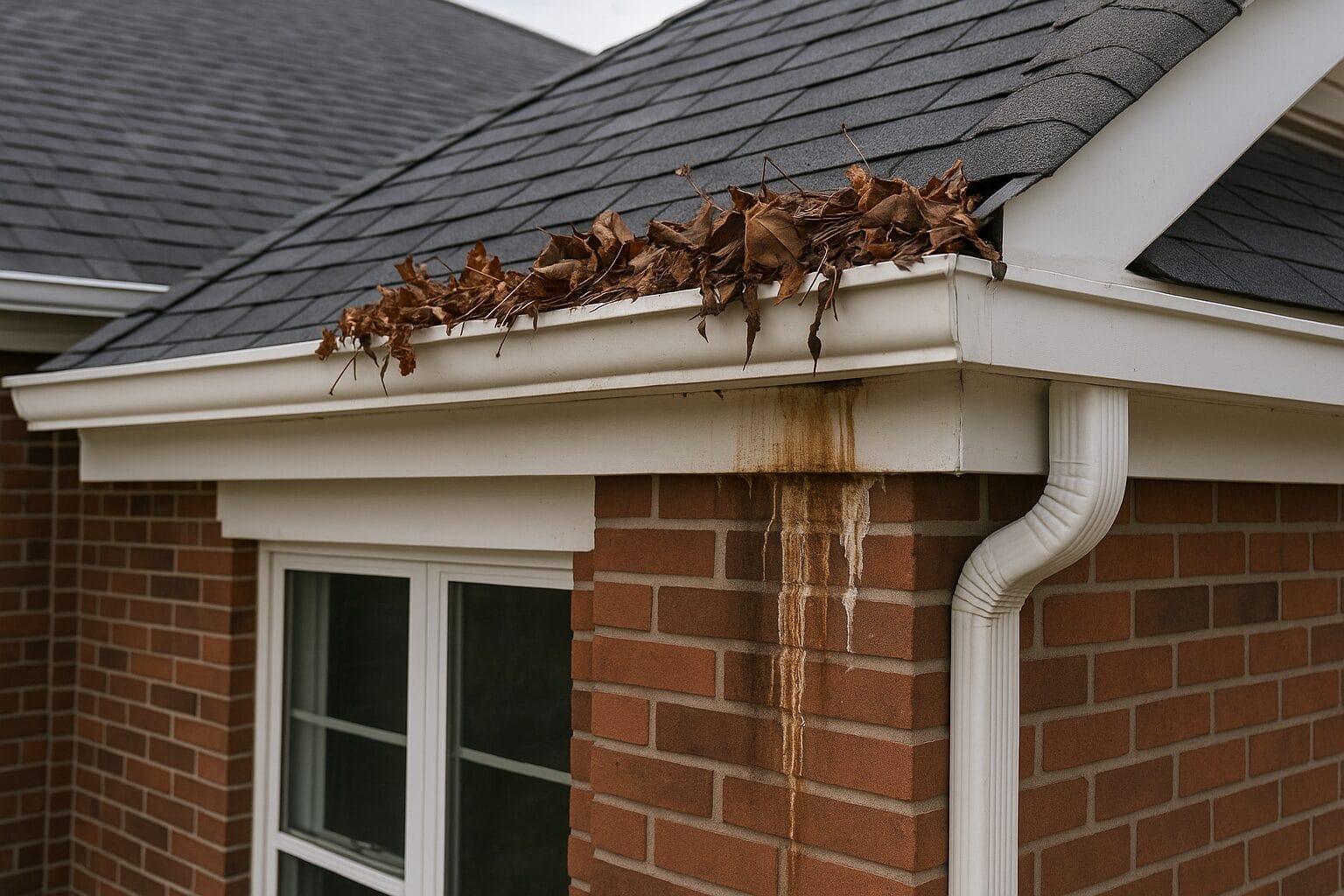
Without functioning gutters, runoff can pool near your foundation, leading to cracks and leaks.
-
Gutters also prevent soil erosion and protect basement windows and doors.
-
They protect siding and paint, reducing maintenance and preserving curb appeal.
Seamless Gutters: What They Are and How They Work
Seamless gutters are made from continuous lengths of material—usually aluminum, sometimes copper or steel—custom-extruded on-site to fit your home. Because they’re fabricated to the exact dimensions of your roofline, they typically have far fewer joints than sectional systems.
Key Features of Seamless Gutters
-
Custom-cut to length at installation
-
Fewer seams—often only at corners and downspouts
-
Smooth appearance with minimal visible joints
-
Often attached with hidden hangers for cleaner look and stronger hold
Sectional Gutters: The Piece-by-Piece Approach
Sectional gutters come in standard 10-foot or 5-foot sections that are joined together at seams. Homeowners or contractors assemble them on the roof, connecting each piece in sequence. They’re widely available at big-box stores and are familiar to many DIYers.
Key Features of Sectional Gutters
-
Pre-fabricated lengths joined with connectors
-
Easy to ship and stock—great for quick replacements
-
Typically less expensive upfront than seamless systems
-
Do-it-yourself friendly for homeowners comfortable on ladders
Seamless vs Sectional: Pros and Cons at a Glance
Let’s simplify the differences into what matters most to homeowners: performance, cost, maintenance, appearance, and longevity.
Seamless Gutters — Pros
-
Less likely to leak because of fewer seams
-
Cleaner, more modern look
-
Custom fit for better water flow and fewer clogs at seams
-
Often longer-lasting with professional installation
Seamless Gutters — Cons
-
Higher upfront cost
-
Requires professional fabrication and installation
-
Repair or replacement of a section can be more involved
Sectional Gutters — Pros
-
Lower upfront cost and widely available
-
DIY-friendly—easy to replace small sections
-
Good for small budgets or quick fixes
Sectional Gutters — Cons
-
More seams mean more potential leaks
-
Seams can trap debris and accelerate clogs
-
Visible seams may be less attractive
Materials: What Gutters Are Made From
Both seamless and sectional gutters come in various materials, and material choice influences durability, cost, and appearance.
Common Materials
-
Aluminum — lightweight, rust-resistant, affordable, and common for seamless systems.
-
Steel — very strong but can rust if not coated; heavier and usually more costly.
-
Copper — premium look and lifespan; expensive but ages beautifully with a patina.
-
Vinyl — cheap and DIY-friendly but vulnerable in extreme temperatures and likely to become brittle over time.
In Indiana towns like Decatur, Huntington, or New Haven, aluminum seamless gutters are popular because they handle seasonal weather well, resist rust, and can be color-matched to your home.
Installation: DIY vs Professional
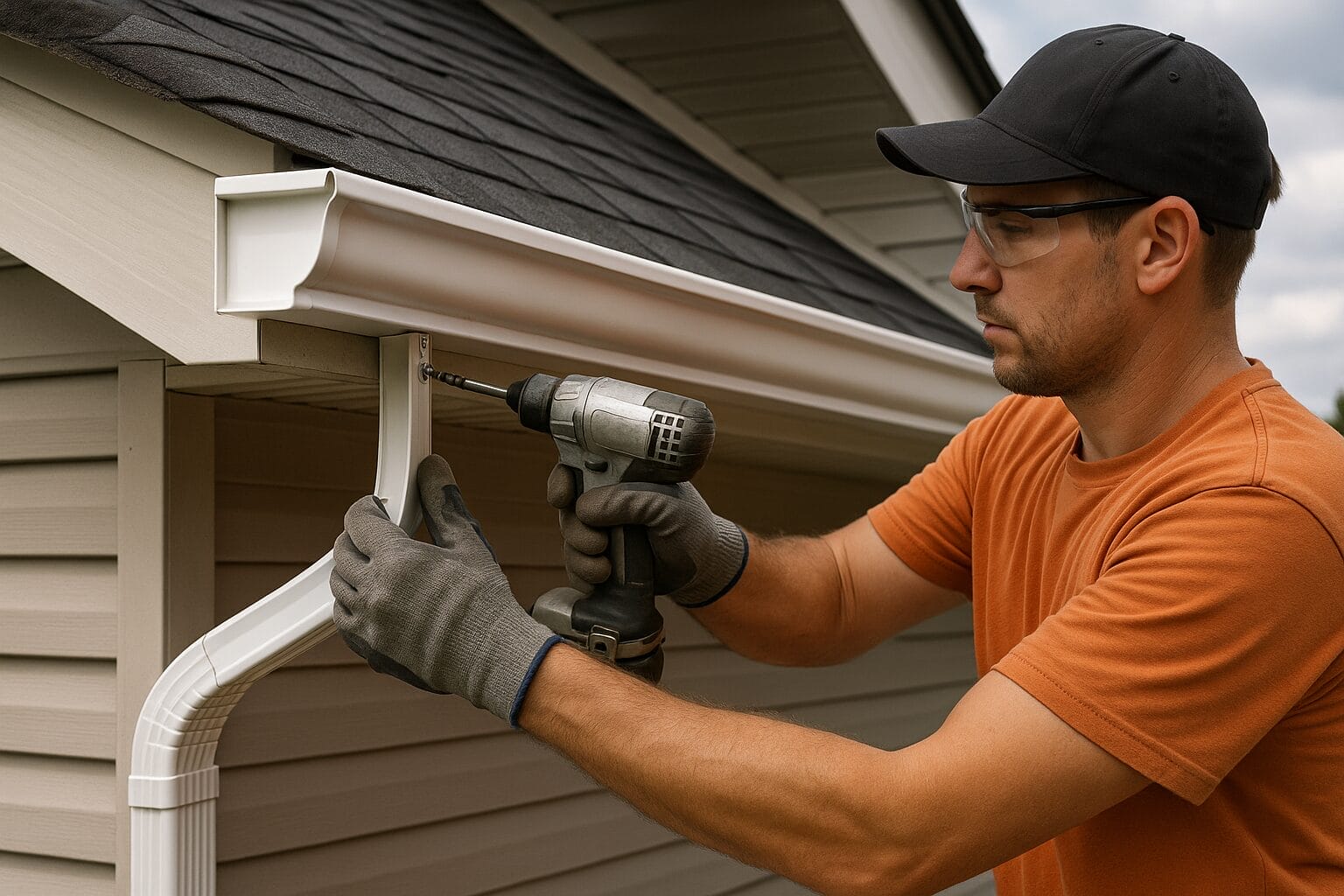
How the gutters are installed affects performance. Seamless gutters nearly always require professional installation because a roll-forming machine cuts and shapes continuous lengths on-site. Sectional gutters are more approachable for DIYers—especially for short runs or repairs.
What Professional Installation Includes
-
Accurate measurements and custom fabrication (for seamless)
-
Proper pitch for water flow
-
Secure hanger spacing and attachment methods
-
Correct placement of downspouts and splash blocks
Professional installation may be slightly pricier, but if you value longevity and fewer problems, it’s often the smarter investment.
Cost Comparison: Upfront Price and Long-Term Value
Cost is a major factor in decisions. Let’s look at the numbers in practical terms. Prices vary by region, house size, material choice, and installer. Below are ballpark ranges to guide you.
-
Sectional aluminum gutters: typically $3–$8 per linear foot (materials + basic installation)
-
Seamless aluminum gutters: typically $6–$12 per linear foot installed
-
Steel or copper will increase costs—copper can be $15–$30+ per linear foot
Think of this like buying a pair of shoes—sectional gutters are the reliable sneakers you can pick up quickly, while seamless gutters are the tailored pair built to fit. The tailored pair costs more, but they often outlast and outperform the cheaper option.
Maintenance and Upkeep
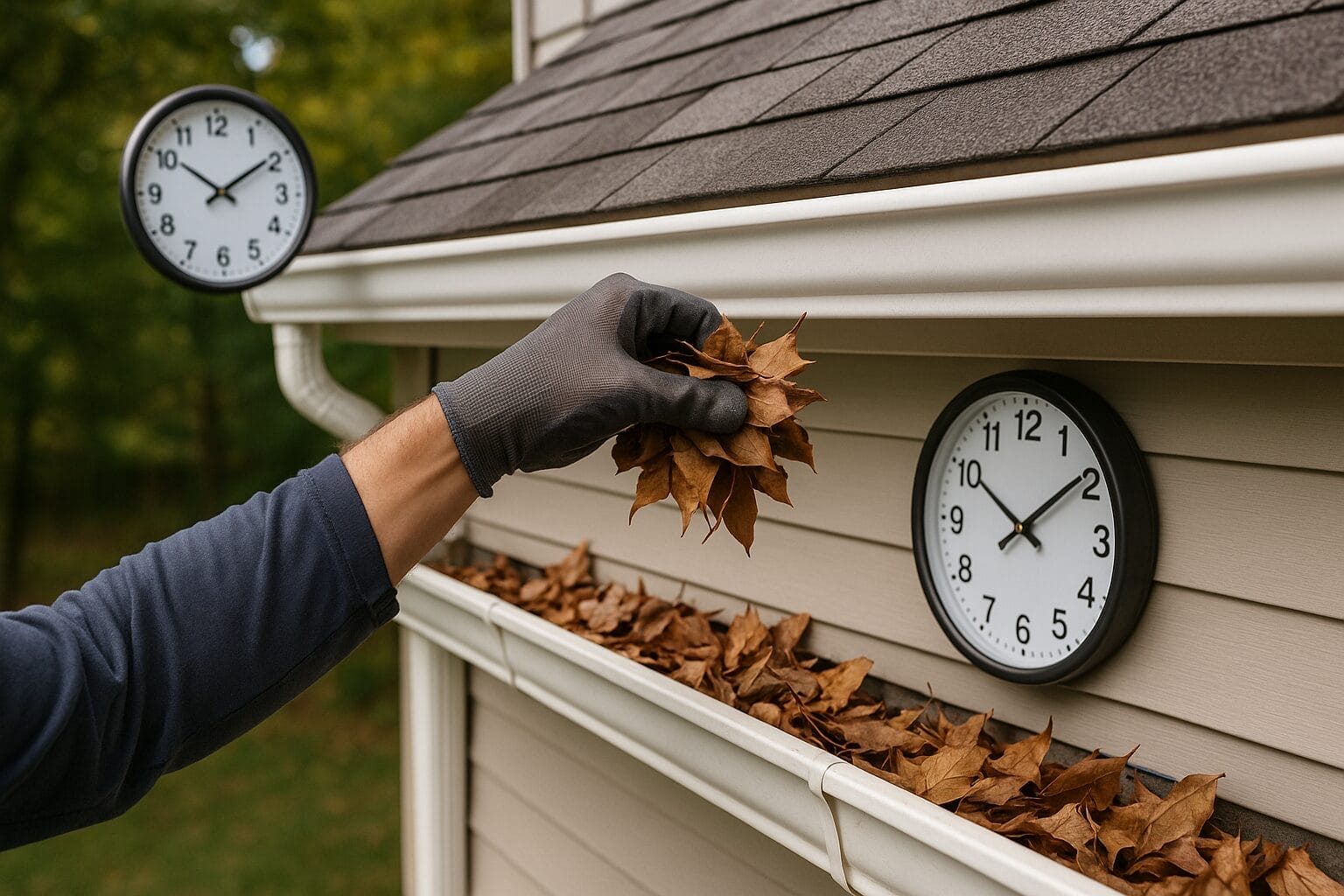
Both systems need maintenance. Leaves, sticks, and shingle grit still get into gutters. However, seams on sectional gutters create pockets where debris lodges and water can soak through, making sectional systems generally higher maintenance.
Maintenance Tips
-
Clean gutters at least twice a year—spring and fall are good times.
-
Use gutter guards or screens to reduce frequency of cleaning.
-
Inspect seams, hangers, and downspouts annually for damage.
-
In cold climates, watch for ice dams—proper roof ventilation and insulation help prevent them.
In communities like Angola or Kendallville where trees can drop leaves quickly, a seamless system with well-fitted guards can significantly reduce time spent cleaning.
Leaks and Repairs: Which Is Easier to Fix?
Sectional gutters are easier to repair piece by piece. If a seam leaks, you can reseal or replace that section. Seamless gutters have fewer seams but when a leak or dent occurs, repairing an on-site custom length might mean replacing a longer stretch or calling professionals for repairs.
Think of sectional gutters like Lego blocks—you replace one block and the rest stands. Seamless gutters are like a single molded shelf—stronger overall, but repairs are less modular.
Appearance and Curb Appeal
Seamless gutters generally win on aesthetics. The continuous look creates a smooth line along the roof, which many homeowners find more attractive. Sectional gutters show joints and can appear less refined, especially on high-visibility homes.
If you’re enhancing curb appeal—say you’re preparing to sell a house in Garrett, Roanoke, or Wolcottville—seamless gutters can be a subtle but effective upgrade.
Performance in Indiana Weather: Freeze-Thaw, Snow, and Heavy Rain
Indiana’s climate includes substantial freeze-thaw cycles and occasional heavy storms. How do each type handle these conditions?
-
Seamless gutters reduce leak points, which matters when water freezes and expands.
-
Sectional gutters can separate at seams if the house settles or if freeze-thaw cycles cause expansion and contraction.
-
Both should be installed with adequate pitch and secure hangers—loose gutters sag and fail more quickly under snow load.
On homes in Fort Wayne, Huntertown, or Spencerville, installing robust hangers and choosing a strong material like aluminum or steel matters more than whether the gutter is seamless or sectional—yet the seamless option reduces potential weak spots during ice formation.
Gutter Guards and Accessories: Compatibility and Recommendations
Gutter guards, screens, and covers can help reduce maintenance. The good news: most guards work with both seamless and sectional systems. However, seam locations can still trap debris in sectional systems even with guards in place, so seamless gutters paired with a high-quality guard tend to be the lowest maintenance.
Types of Gutter Guards
-
Mesh screens — blocks large debris while allowing water through
-
Reverse-curve covers — designed to guide water into the gutter and shed debris
-
Foam inserts — slide inside the gutter to block leaves but can trap standing water if not fitted correctly
-
Micro-mesh systems — often more effective but pricier
Ask your installer about guard compatibility and warranties—some warranties are voided if an incompatible guard causes issues.
Lifespan and Warranties
How long your gutters last depends on material, installation quality, maintenance, and local weather. Seamless aluminum gutters installed professionally can last 20–30 years with minimal maintenance. Sectional gutters often have shorter lifespans, especially if installed cheaply or if seams corrode or pull apart over time.
Warranties vary—look for a long workmanship warranty from reputable local installers in cities like New Haven and Leo-Cedarville. Manufacturers also offer material warranties—copper often has the longest material warranty but costs more upfront.
Choosing Based on House Type and Roof Complexity
Your home’s architecture influences the best gutter choice. Homes with multiple dormers, irregular rooflines, or long runs benefit from seamless gutters because they reduce the number of joints that must fit around roof complexities.
For simple sheds or small additions, sectional gutters might be perfectly adequate and cost-effective.
Common Mistakes to Avoid
-
Choosing solely on price—cheap upfront options can cost more in repeated repairs.
-
Ignoring downspout placement—having too few downspouts can overload gutters during heavy rain.
-
Overlooking hanger type—every few feet hangers fail less often than spike-and-ferrule systems.
-
Not factoring in local climate—freeze-thaw regions need sturdier materials and professional installation.
How to Get Accurate Quotes and What to Ask Installers
Shopping for quotes? Great. To compare apples to apples, ask every installer the same set of questions. Here’s a helpful checklist:
-
Are you licensed and insured? (Important for liability and workmanship)
-
Do you offer a written estimate including materials, labor, and permits?
-
What type of hangers and fasteners do you use?
-
How many downspouts will you install and where?
-
What is the pitch you intend to use for water flow?
-
Are guards included or optional? If optional, what brands are recommended?
-
Do you provide a warranty on materials and workmanship?
In towns like Bluffton or Warsaw, asking for local references is helpful—reputable installers should have recent jobs nearby and be willing to show before-and-after photos.
DIY: When It Makes Sense and When to Call a Pro
Do you enjoy home projects and feel comfortable on a ladder? Sectional gutters can be an approachable DIY weekend project. But there are risks: improper pitch, insecure hangers, or missed fastenings can cause failure. If your roof is steep, high, or complex—or your home is older with sensitive fascia—hire a pro.
Seamless gutters typically require pros because of the roll-forming equipment. If you’re in Garrett, Ossian, or Waterloo and want seamless, call local installers for measurements and quotes.
Case Studies: Local Examples from the Region
Let’s imagine two local homeowners to make this concrete.
Case 1: The Historic Home in Columbia City
Anna has a 1920s colonial with ornate eaves. She chose seamless aluminum gutters with hidden hangers to preserve architectural lines. The installer matched paint to her trim, and the fewer seams minimized future leaks in winter. Cost was higher, but the long-term reduction in maintenance made it worthwhile for her peace of mind.
Case 2: The Ranch in Kendallville
Mike has a simple one-story ranch with straightforward rooflines and a tight budget. Sectional gutters paired with high-quality hangers and two downspouts managed stormwater effectively for years. When one seam leaked after a hail storm, a $50 section replacement fixed it quickly.
Environmental Considerations and Water Management
Good gutters are part of a broader water-management plan. Consider adding extensions or splash blocks to direct water away from foundations. Rain barrels can capture roof runoff for garden use, which is especially useful during dry summers.
For properties in rural areas around Roanoke or Spencerville, directing gutters into a rain garden can protect local waterways and reduce erosion.
Final Decision Guide: Which Is Better for You?
So, which should you choose? Here’s a quick decision map:
-
Choose seamless if you want low maintenance, a cleaner look, fewer leaks, and you plan to stay in your home long-term.
-
Choose sectional if you need a lower upfront cost, prefer DIY or easy repairs, and your roof is simple without long, continuous runs.
-
If you live where heavy snow and freeze-thaw cycles are common (Fort Wayne, Decatur, Huntington), lean toward seamless with strong hangers and proper roof insulation to avoid ice dams.
Checklist Before Installation
Use this short checklist before signing a contract:
-
Verify installer credentials and insurance
-
Confirm material type and color options
-
Ask about hanger spacing, downspout locations, and pitch
-
Get a written estimate with timeline and warranty details
-
Ask for local references or example projects
Conclusion
In the seamless vs sectional gutters matchup, there’s no one-size-fits-all winner. Seamless gutters generally deliver better long-term performance, fewer leaks, and a cleaner appearance—making them a strong choice for homeowners who want a durable, low-maintenance solution. Sectional gutters offer affordability and DIY convenience for simpler homes or tight budgets.
If you live in the Fort Wayne area or nearby towns like Auburn, Columbia City, Warsaw, or New Haven, consider how local weather, roof complexity, and long-term plans influence your decision. When in doubt, get a few written quotes from reputable local installers, ask the right questions, and choose the option that balances cost, performance, and your peace of mind.
Ready to make a decision? A quick local consultation can clarify the best path for your home—especially if you want to avoid future headaches from water damage.
FAQs
1. How long do seamless gutters last compared to sectional gutters?
Seamless gutters typically last 20–30 years with quality materials and professional installation, while sectional gutters often have a shorter lifespan due to more seams and potential for leaks. Lifespan also depends on material (copper lasts longer than aluminum) and maintenance.
2. Are seamless gutters worth the extra cost?
For many homeowners, yes. The reduced risk of leaks, lower maintenance, and cleaner look often justify the higher upfront expense—especially in climates with heavy rain or freeze-thaw cycles, like much of northeastern Indiana.
3. Can I install gutter guards on both types of gutters?
Yes, most gutter guard systems are compatible with both seamless and sectional gutters. However, seamless gutters with guards generally require less cleaning because there are fewer seams to trap debris. Ensure the guard you choose is compatible with your gutter profile.
4. What is the best material for gutters in Indiana?
Aluminum is a popular choice because it’s rust-resistant, affordable, and handles our seasonal temperature swings well. Steel is stronger but can rust, and copper is highly durable and attractive but expensive. Choose a material based on budget and desired lifespan.
5. How do I find a reliable gutter installer in my area?
Start with local recommendations in towns like Fort Wayne, Huntington, or Kendallville. Ask for proof of insurance, written estimates, warranties, and references from recent jobs nearby. Look for companies that measure on-site, use quality hangers, and offer a clear warranty on workmanship.